
Safety of Plasma from Vaccinated Donors: What Longevity Patients Need to Know
Quick answer: Is plasma from vaccinated donors safe?
Safety of plasma from vaccinated donors is supported by current evidence from large hospital studies and transfusion-medicine experts, which show no increase in blood clots, respiratory complications, or death among recipients. A 2025 analysis highlighted by AABB and America’s Blood Centers found no additional risk tied to donor vaccination status.
Vaccine mRNA and spike protein also appear to decline over weeks, not months or years, and are not regarded as a transfusion-safety issue by blood-banking organizations. For a patient-friendly explanation, Nebraska Medicine offers a clear summary of how long mRNA and spike proteins typically remain in the body.
Why this matters for young plasma exchange
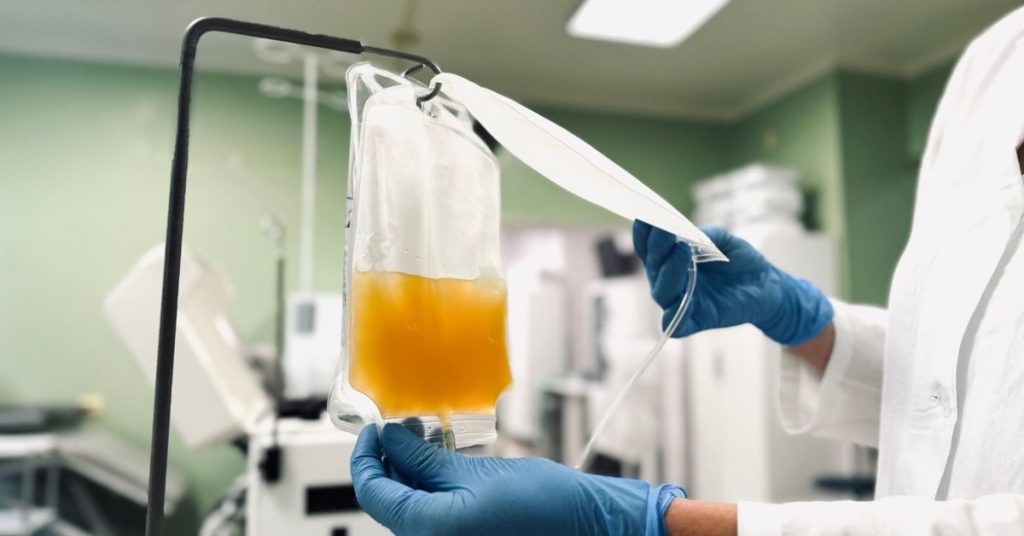
At Austin Regenerative Therapy in Austin, Texas, patients travel from across the country and internationally for the clinic’s Young Plasma Exchange service, which is positioned as a full exchange protocol rather than standard therapeutic plasma exchange alone. The clinic describes Young Plasma Exchange as a protocol that removes a portion of aged plasma and replaces it with plasma from young, healthy donors ages 18 to 26.
For general readers and longevity enthusiasts, one concern comes up again and again: if the donor had a COVID vaccine, does that mean the recipient is also receiving vaccine mRNA or spike protein. That question is understandable, especially when people are investing in advanced longevity therapies and want transparency about what is entering their bodies.
The reassuring news is that the current evidence does not support the idea that plasma from vaccinated donors creates a unique safety problem. The more useful question is not whether vaccinated donor plasma is inherently dangerous, but whether the protocol is performed thoughtfully, sourced responsibly, and supervised appropriately.
How long do vaccine mRNA and spike protein last?
mRNA vaccines work by delivering temporary instructions that help the body make spike protein for a brief period so the immune system can build recognition and immunity. Those vaccine components are not designed to remain in circulation indefinitely.
Published research suggests vaccine mRNA is usually detectable in blood for days to a couple of weeks, with rare low-level detections slightly beyond that window. A study available through PMC reported detection up to about 15 days in most cases, while other summaries have described a similar short time course.
Spike protein appears to follow a similar pattern in healthy people. In practical terms, that means these materials are short-lived, and by the time someone is healthy, screened, and eligible to donate, vaccine mRNA and spike protein are expected to be at very low or undetectable levels. Helpful overviews on this topic are available from Nebraska Medicine and Healthline.
A careful way to explain this to patients is simple: getting plasma from a vaccinated donor does not mean you are receiving meaningful amounts of active vaccine material. The biology and the timing of donation do not support that concern.
Donation rules add another layer of safety
Blood and plasma donation systems are built around conservative screening standards. Donors must meet health criteria, avoid donation when acutely ill, and follow timing rules between donations.
For example, many whole-blood programs require 56 days between donations, although exact timing can vary by product type and collection center. Resources such as WebMD’s donor overview, AABB’s vaccination and blood donation guidance, and regional blood center eligibility pages help show how these systems are structured.
The practical implication is that donor plasma used in regulated settings is collected well after the short post-vaccination period when mRNA or spike may briefly circulate. It is also important to remember that COVID-19 vaccines do not contain live, replicating virus, so receiving plasma from a vaccinated donor cannot give someone COVID-19 through transfusion.
The strongest evidence on the safety of plasma from vaccinated donors
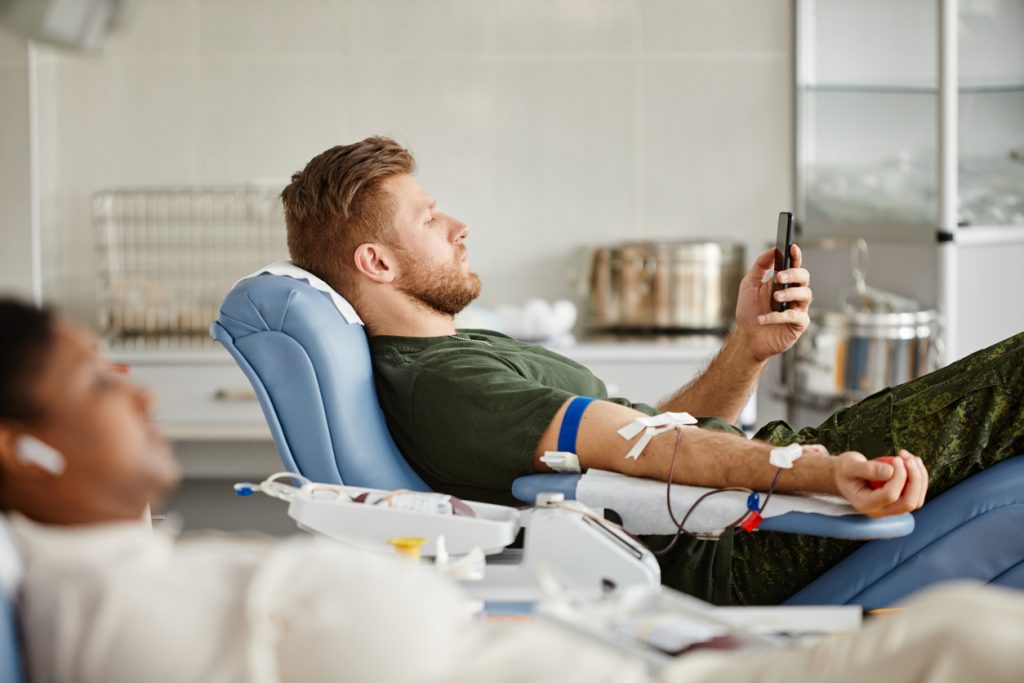
The most relevant real-world evidence comes from a 2025 study in Transfusion that was summarized by AABB and America’s Blood Centers. Researchers evaluated 7,773 transfusion recipients who received more than 19,000 plasma units and more than 15,000 platelet units from donors with different COVID-19 vaccination and infection histories.
The findings were reassuring. Patients who received blood components from vaccinated or previously infected donors did not experience higher rates of thrombotic events, respiratory complications, or in-hospital mortality.
That is the clearest answer currently available for anyone searching the phrase “safety of plasma from vaccinated donors.” Large-scale outcome data do not show an added safety risk based on donor vaccination status.
This matters because it moves the conversation out of the realm of internet speculation and into the realm of measurable outcomes. Instead of asking what might happen in theory, patients can look at what did happen across thousands of actual transfusion recipients.
What FDA and AABB guidance really says
Major transfusion organizations have remained consistent: blood and plasma from vaccinated donors are acceptable for use when standard donor eligibility criteria are met. AABB’s public materials do not treat donor vaccination status as a reason to separate or avoid blood products.
The FDA has also published an important warning about young donor plasma for unapproved uses. That warning is frequently misunderstood. The agency’s concern is not that vaccinated donor plasma is unsafe. The concern is that some clinics have marketed plasma from young donors for anti-aging, memory loss, dementia, and other wellness purposes without enough evidence of benefit.
The FDA also reminds the public that plasma transfusion carries known risks regardless of why it is being used. These include allergic reactions, infection risk, transfusion-related acute lung injury, and circulatory overload. So the safety conversation around young plasma should stay grounded in real transfusion medicine, not vaccine fears alone.
What this means for longevity patients
For patients exploring young plasma exchange, the most important safety questions are still the fundamentals: how donors are screened, where the plasma is sourced, how the protocol is supervised, and how the clinic monitors for known plasma-related risks.
There is currently no published evidence showing that selecting only unvaccinated donors improves safety or outcomes in a longevity-focused plasma protocol. There are also no head-to-head studies showing superior anti-aging results based on donor vaccination status alone.
What the evidence does support is more practical and more useful. Plasma from vaccinated donors has not been shown to increase recipient risk in large transfusion datasets, and vaccine components are not expected to persist in a way that changes the safety profile of donated plasma.
For readers who want to understand Austin Regenerative Therapy’s specific approach, the clinic’s Young Plasma Exchange page explains how the protocol is framed, including its use of young donor plasma and its broader longevity positioning.
Sources
- Austin Regenerative Therapy. Young Plasma Exchange
- FDA. Update to Important Information about Young Donor Plasma for Unapproved Uses
- AABB. Study Confirms That COVID-19 Vaccines, Past Infection Pose No Risk to Blood Transfusion Recipients
- America’s Blood Centers. Safety of Blood Transfusions from Vaccinated Individuals Confirmed by Researchers
- AABB. Vaccinations and Blood Donation
- Healthline. Blood Transfusions from COVID-19-Vaccinated Donors
- WebMD. Can I Donate Blood After Getting a COVID Vaccine?
- Fertig et al. Vaccine mRNA Can Be Detected in Blood at 15 Days Post-Vaccination
- Nebraska Medicine. How long do mRNA and spike proteins last in the body?
- Ogata et al. Circulating Spike Protein Detected in Post-COVID-19 mRNA Vaccine Recipients
- Gulf Coast Regional Blood Center. Requirements for Donating Blood
